Author Archive
A Desultory Epistle on Little Boxes, Winter, Fathers and Sons.
Wu wei is the Chinese Taoist term for the advice I was given. The doing of not doing.
“If you have the time get into the woods with your dog or horse . . . just sit with them . . . for days. Don’t be looking for some answer. Turn off your brain as much as possible.”
So goes the advice of another therapist, advice I would if someone were asking me. So often we know the answer but forget the doing and seldom can do what we know it is the thing to do.
I discovered this therapist’s blog the other day while surfing the web looking for information about equine facilitated therapy. His blog speaks about how his twenty years of work turned him upside down – “so abused by the system with 16 hr days, 10 on w/e, 24/7 on call, no vacations for a good 15 years I am wondering if I can undo the damage . . . ”
I commonly hear this refrain when I am in touch with others in the profession. I suspect it is more than just psychotherapists who sing this song.
In this time of re learning wu wei I think of often Colorado, the place I fell in love with the west as a boy. I miss the Collegiate peaks – the snow blowing off of the tops of the mountains, the tall pines, the willows and the cottonwoods along the banks of the streams that carry the melted snow from the sky to the valley below. How was it the woman who is recovering form cancer said – “be as the Mountain and the storms and everything passes.”
Picture a small place on a flowing river – not an expensive place. A small place with a few acres and horse corrals made of lodge pole pines. Corrals full of shaggy horses. A round-pen made of lodge poles as well. And children, and warriors home from the wars, coming to learn by being with horses and in the being with horses learning to have peace again. Surrounding this small place of peace are mountains, high, soaring real mountains with snow capped peaks. The wind tailing snow off the tops and filling all our spirits with peace.
Wind Horse Ranch.
Beyond the mountains, my other lasting impression of Colorado is of the houses in Aurora, big houses, five thousand square foot houses with no curtains – houses all lined up like –
1. Little boxes on the hillside, 3. And they all play on the golf-course,
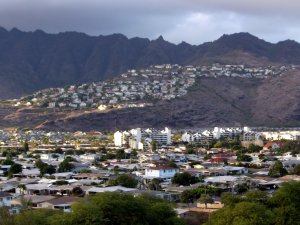
Little boxes made of ticky-tacky, And drink their Martini dry,
Little boxes, little boxes, And they all have pretty children
Little boxes, all the same. And the children go to school.
There’s a green one and a pink one And the children go to summer camp
And a blue one and a yellow one And then to the university,
And they’re all made out of ticky-tacky And they all get put in boxes
And they all look just the same. And they all come out the same.
2. And the people in the houses 4. And the boys go into business,
All go to the university, And marry, and raise a family,
And they all get put in boxes, And they all get put in boxes,
Little boxes, all the same. Little boxes, all the same.
And there’s doctors and there’s lawyers There’s a green one and a pink one
And business executives, And a blue one and a yellow one
And they’re all made out of ticky-tacky And they’re all made out of ticky-tacky
And they all look just the same. And they all look just the same.
Houses born of the business of business as people crowd into cities.
Calvin Coolidge said the business of America is business. I think “business” is just another word for illness, a consumptive illness like tuberculosis. “Busy ness” by any measure is just busy, busy looking out and taking control – an over doing.
Wu wei – the doing of not doing – the polar opposite thinking of bus-i-ness.
We are all busy and burned out on the drive behind making a great deal of money then consuming and making more and consuming more. The business of life should not be business it should be being – loving, living, laughing.
In this enforced wu wei am returning to my grandfather’s socialist roots. I need to – not a life of consumption but a life of community. Consumerism for its own sake – capitalism for its own sake – there is no wisdom there.
That is why the mayor of this town is a fool and so unwise.
I think, too, some days, about the idea of blooming where you are planted. Then more welcomed advice comes from a friend who knows me all too well-
‘”Start small – Find a small place in the mountains where there is a market for “Equine Facilitated Therapy” (need to do some homework here) somewhere where Kathryn can do her work while you do yours, (there’s BOUND to be some places to choose from) sell the houses, use the money to move and get malpractice insurance. Get busy. Kathryn would probably love it as well, as soon as she got over the shock. 🙂 I do know for a fact that living with a poor, HAPPY man is much easier (and more fun) than living with a well to do UNHAPPY man. Figure out the worse case scenario and whether or not you could live with it, should it happen. Always keep in mind, however, that I am NOT AN EXPERT and, according to my Mother, ‘fear nothing.'”
It is no longer fear that drives me but uncertainty. And tiredness. And the fact I now have friends here. I have been an expert and find that experts are in the end pretty useless so I am glad my friend is not an expert, just a friend.
I miss winter and “the ways in which winter frees our imagination and invigorates our feet, mind and soul -” the emptiness of winter that ” frees us from the fear that our ‘democracy of gratification’ has irreparably altered,” us. Twenty three years ago I left winter behind and have missed it ever since. I know that winter is a luxury of youth and hard, hard, hard. Without winter though I got fat and lazy and find that my parts don’t work as well. In winter I used to run eight miles a day – in perpetual summer I barely walk – nothing draws me out – I look forward to colder days when I am more inclined to sleep well and play with the dogs and the horse. I miss the starkness forests too and the rustle of leaves, dry in the cold air. Winter always invigorates. Summer oppresses.
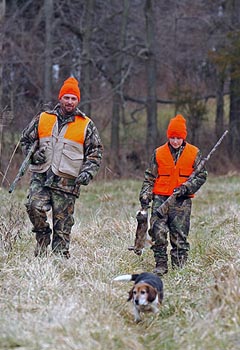
Picture a boy, twelve – his step-father and a young beagle. The man and boy carry shotguns and walk over brown fields of harvested corn and wheat, pastures last cutting of hay left standing as graze for the wintering horses and cows. Along the margins, woods. Bare naked trunks, dark gray, a woven impenetrable wall of crooked iron bars. The man and boy walk quietly. The beagle bays as it pursues long-eared rabbits circling for the shelter of the woods. A cold day of blue gray clouds. In the distance farm houses and barns. A day like an Andrew Wyeth painting.
 And later, the boy cold and happy falls asleep in the warmth of the car on the way home, the man aware of this moment wishing it would last and not knowing how to keep the gap bridged, knowing that all other times the boy is simply afraid of him. The man hates it, hurts from it. Maybe I want days like that again.
I feel that it was after I left winter behind that I lost that. It was in summer, the heavy sweltering heat of summer I lost myself in the stories of others. I told my fellow psychologist that I know within ten minutes of my clients arrival what the stories would be. He replied
“Actually, you knew the story within the first 30 seconds more often than not.” That is more the truth.
I traded the forests of my youth for these stories and was left cheated in the bargain. It was a long time discovering that one should never trade a life for a story, not even for a million stories.
In my life I have been:
a medical technician doing alterative service from war only to find another kind of war in a trauma center.
a phlebotomist drawing blood until one day I saw it turn green in the tubes in my hand.
an art historian looking for peace in the life of the mind and finding only competition and battles between people of such certainty they were uncertain and could only tear each other down.
a public school teacher teaching English and EH/SED and found the joy of children as they excitedly discovered the power of the Red Pony to express their own lives.
a therapist listening to stories not as good as the Red Pony, stories that tore me down.
a part time deputy sheriff,
a part time fireman and
a part time leader of search and rescue.
The most rewarding of all these was the riding with a partner in a car, patrolling the night or standing on the fire line of a wild fire with men of common desires or the seeing the faces of children finding the Red Pony.
No, the reality is, the truth is, that the most rewarding was the boy and his dad and a beagle coming in from the cold – the dad not drunk for once and the boy feeling safe enough for once to fall asleep and the Dad wise enough to gently wake the boy when they got home. Wu wei, the doing of not doing.
That late December day is what I really am looking for – the ability to turn off my brain and just be – to live in natural action – as planets revolve around the sun, or as trees grow. To “do”, but without “doing”. Thus knowing when (and how) to act, doing the natural thing instead of the un-natural. “If you have the time get into the woods with your dog or horse . . . just sit with them . . . for days. Don’t be looking for some answer. Turn off your brain as much as possible.”
Simply be . . . In His Service
A Different Sort of Fasting
2) Continuing my work as a healer
a) as a psychotherapist
b) in emergency services
3) Being a creative artist with a small “a” not with a capital “A”
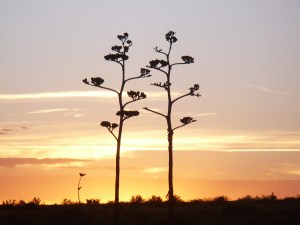
A Tree Should be Indigenous to Its Native Area
No, I didn’t say I was giving up my faith in my journal yesterday. If Buddhism had worked for me then I would have remained a Buddhist. After twenty years of practice I found that the simple act of surrendering to Christ was the act I needed. Maybe that was the point of Buddhism as well, one simply “surrenders” to the life one has. Somewhere though, in the mind-bending intellectual exercises of Buddhism, something gets lost, at least I got lost. It simply put me too much in my head. Buddhism is much like psychology in that way. One does simply have to find a place where one belongs and prosper there. One also has to get out of one’s head and simply live.
The other day I was asked to do some respite care. Four years ago a young man who was under the care of a friend at the agency I worked at found out I was looking for a house. He found this one for me and delivered the message through my friend and co-worker. My colleague moved on and is no longer this man’s therapist but he and I have remained acquaintances. He is in his forties now and autistic and mildly “retarded” whatever that means. His parents have asked me to watch over him while they go to Panama. It is an honor to do so. This autistic young man was the unexpected angel who led me to my home, I will never forget his generosity of spirit. That this gentleman, a retired minister, would trust me with his son is a personal validation in spite of the chaos and criticism of some in my profession here. His trust affirms for me that I have stayed true to my course, that I am trustworthy and professional.
Living here in Carlsbad has been a mixed bag. I have found friendship unexpected as well as frustration and pain.
Kathryn is beginning to find this small farm, this “finca” as they say in Spanish, home as well. It has been a year (yes, today is our anniversary) and this weekend we will finally have her house cleared out enough to turn over to the rental agent. We meet the rental agent’s cleaning crew today to find out what needs to be done to get the house finally ready. It has been a tough year for both of us. Being older and blending lives while trying desperately to hold on to old habits has been maddening for both of us. Add to that the drama and turmoil around us of those in the mental health field here and I wasn’t sure we would make it. I am still struggling with Kathryn’s “football-itis.” I have always struggled with spectator sports and find the commercialism of TV team sports irritating. I am sure I will make my peace with that as I have made my peace with cabinets that now seem over full. It has taken time but is coming together.
I have given long thought to what I should do next. I have mixed feelings about the equine assisted therapy. The man who has asked me to watch over his son became quiet interested when I told him what I was thinking and said that this town badly needed such a program. He knows, as we all do, that the mental health center here in town has failed the town badly.
For me, doing Equine-Assisted Psychotherapy is a fuzzy thing. Is it really “therapy” or is it teaching people “horse training?” I know it is more than horse training but I will have to really change how I see what I do in order to do it.
I badly want to step away form the role of “therapist.” I am tired of people’s pain and broken-ness, tired of the stories piled upon stories of hurt. There has to be more for people, I know that. I know too that people are tired of the jargon and the platitudes of psychotherapy. I know too that the best therapy is doing something, being engaged in life. We all need life experiences of accomplishment, things that bring us joy. This joy can and should come from a lot of things – Boy Scouts, participating in sports – the list is long. I know too that active joy is missing from many lives. I know too that an hour of “therapy” per week – the therapy of sitting in an office – can serve a purpose but it does not move people to the joy of mastery – any more than sitting in church for an hour a week. Yet, I am as bad as the therapists I rail about. I am trained in analytical office work. To me therapy has always looked like the guy sitting in an office in his tweed jacket, surrounded by books and in the quiet sanctum of the office he helps people explore their depths.
I tend to think that what I would really be doing is nothing more than teaching people ground work with horses. I think I may as well be a horse trainer or riding instructor. Yet, I know it would be more.
I know from my dreams that I have been spiritually moved on from the hermitage in the forest. Spiritually I have crossed the desert and know that the role of therapist, of seeker leads to more. I think often about the Herman Hesse book Siddhartha and how at the need of things Siddhartha becomes a ferryman on the river, carrying others to the shore, knowing that the place of his arrival is right where he is. I know that the same place comes from being a horseman, my ferry can be the work with horses. The value of doing it from the journey of being a therapist would simply be that even if I am no more than a riding instructor – a horse-ground-work-training-instructor – the insurance companies and colleagues and whoever will provide a source of referrals of people who might never try this route. Anyway, I am still thinking about what to do, the steps to take. I know that I would have to engage in a national horsemanship program of some sort to improve my own horse skills. Finding one that is not a “cult” like Parelli could be tough.
Finally, the quote above is from a blog out of Cody, Wyoming, called, “At Home in Wyoming.” She writes about how during an unexpected cold snap the green leaves of the non native trees fell all at once. I have seen such a thing once as well, it is something to see. She also makes the very good point that we must in some why find out place, our native place in the land and in our souls and there we will find home. Home is where work is not work but life itself. Home is where we all want to be – just like Dorothy. I have more to say about Dorothy and home, but today I need to get moving and there is tomorrow as long as we have breath to give . .
Wild Goose Heart
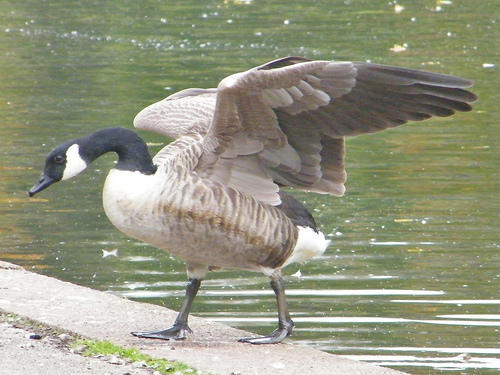 The sky has returned to the thin egg shell of robins’ egg blue that covered the desert all summer. Though the days are warm again, the chill of this morning’s air makes it almost too hard not to connect with feelings. In the dizzying bright coolness of a new day I feel autumn and that is not such a bad feeling if one feeling is all the heat of the day, which will lay on this land like a suffocating blanket, allows.
With a kiss I draw Movie from the back field. A change has come to her as well. Last year when my soul was soaked by the energy of the shame and the violence of the people surrounding me, which in turn expressed itself through me as the energy of pain and anger; Movie barely tolerated me. Now she is, as is my soul, is more open, coming easily when I call her with kisses. I lean on the fence in the morning light and watch her swaying, swaggering walk, a belly full of hay, hoping for more. Her movement is like the morning exercise of some wise fat Taoist master full of the meaning of life.
I thought of my years of Buddhist practice while I watched Movie sway across the field. I was reminded of moving meditations learned in the practice of Gung Fu, Tai Chi and Qigong. I learned a style of Qigong called Wild Goose Heart. In the cool morning, as I watched Movie dance across the field, I thought about the differences I felt then as I focused too hard some days on my own enlightenment – my head feeling like it would explode at times because of the analytic chores of Buddhist Scripture, and then other days my soul soaring like a wild goose as I sat in meditation, or walked in meditation through woods and field, freed from life as text.
I realize now the chore of those scriptures was as much about making me realize that life cannot be lived as text, that one cannot catch the wild goose in the net of the mind. Peace, enlightenment, joy has to come to one who is freed like the wild goose is free. Life not as ruled by text but as spirit freed from text. I know my Christian friends panic when my thoughts return to the Buddhism I learned and practiced for so many years. They panic because they, as good friends, fear for my soul, fear that I will be lost and burn in hell. I have no such fear.
Last night I watched one of Kathryn’s programs with her – a gay Hispanic woman is confronted by her father verbally throwing Biblical scripture against homosexuality at her, convinced, and trying to convince her, she was going to hell. She, with even greater power threw back the Beatitudes. Powerful stuff the Beatitudes. I wondered as I watched this exchange what Christian faith would be like if we threw away the Old Testament and the Acts and the Epistles and only had left the good news that Jesus taught. In my heart I know it would look like the deeper regions of Buddhist and Taoist Practice I explored, practices of tolerance and peace and oneness with life, not finding heaven out there somewhere but finding both heaven and hell in the human heart and opting for the peace of Heaven.
I can easily understand why so many think that Jesus must have studied in Tibet before he came to Galilee to teach. The Beatitudes are “the core” of Buddhist life practice and seem like an anomaly preached in the context of the legalism of the Judaism of Jesus’ day – or the legalism of fundamental Judaism, Christianity or Islam today. (I doubt if Jesus studied in the east, though it is historical fact that there were Buddhists teachers in the area of Judea and had been for two hundred years. We forget that the Hellenic world that followed the death of Alexander was as cosmopolitan as America is today. For those doubting such a connection I have added a link to provide some historical information.
(http://www.religionfacts.com/buddhism/history/hellenistic.htm)
The Buddhism I practiced was a Buddhism infused with the teachings of what came to be called the Beatitudes. They are very much two religions walking similar paths. It is a shame that one, the Christian, is not tolerant of the other, the Buddhist. When one moves deeply into Buddhism one soon discovers the Beatitudes of Jesus and the teaching of the Siddhartha Gautama are the much the same. One eventually discovers that Buddhists believe that what Christian call Christ is in all of us, all too often a flame unlit.
Christianity, no more so than Judaism or Islam, at least the fundamental versions which rely too heavily on the Old Testament or upon textual Scripture, is not tolerant in the main of views other than its own. These three faith walks are like three old men walking on the same road side by side refusing to acknowledge the existence of the other or of any other travelers on the road. They trap the soul, the spirit, through the regulation of the conduct of life like out of control traffic cops until life’s journey becomes an angry bitter feud about how one should walk the path. Chinese Confucianism is like that as well and I find it interesting in the “East” the two paths – the path of social behavior and the path of spiritual awakening – diverged into two parallel roads. I suspect there was good reason for that. It surely does not seem to work to create a spirit filled and tolerant life in the West when we take the legalistic ethics of Judaism, Christianity and Islam and try to apply them to the spirit filled life.
I have found that when one simply lives the the spirit filled life it creates good behavior the way that Chrysanthemums create flowers, it simply happens and one cannot force it.
These thoughts came to me in a moment then were gone, like geese soaring across this brilliant dry sky and I was left with the knowledge that life in the chill of the morning air was more than enough. As Movie finished her dancing Tai Chi walk across the field I heard dogs barking, sounding in the distance like geese. From the front of the property the morning traffic rushed past farms, strung like pearls along the lane. Each car sounded like the soughing of a sea wave rolling in a syncopated rhythm onto a beach. All of this in a moment reminded me that each moment is its own enlightenment into heaven or hell. The choice is up to us.
You do not have to be good.
You do not have to walk on your knees
for a hundred miles through the desert repenting.
You only have to let the soft animal of your body love what it loves.
Tell me about despair, yours,
and I will tell you mine.
Meanwhile the world goes on.
Meanwhile the sun and the clear pebbles
of the rain are moving across the landscapes,
over the prairies and the deep trees,
the mountains and the rivers.
Meanwhile the wild geese, high in the clean blue air,
are heading home again.
Whoever you are,
no matter how lonely,
the world offers itself to your imagination,
calls to you like the wild geese,
harsh and exciting – over and over announcing
your place in the family of things.
Mary Oliver
In His Service – Whatever we choose to call Him as you live there and in doing so, respecting whatever path He calls each of us to walk upon to Him.
Wilderness Related Matters
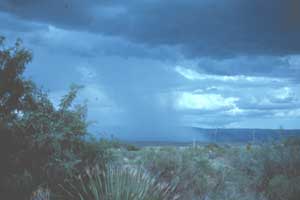 “No Tyranny is so irksome as petty tyranny: the officious demands of policemen, government clerks, and electro mechanical gadgets.” Edward Abbey
I always thought I had a pretty good idea of what constituted wilderness and things related to wilderness. I live in an isolated and rural area of the United States. I am surrounded by National Parks, National Forests, and State Parks. I live not very far from the first wilderness area ever designated as such in the United States, the Aldo Leopold. Most of my close friends are conservationists. I am married to a Park Ranger and we often speak of wilderness issues. I thought I understood wilderness until I received an email from a woman at the University of Montana who accidentally was added to my journal mailing list by the mysterious self adding genie living in my computer.
“A wilderness, in contrast with those areas where man and his own works dominate the landscape, is hereby recognized as an area where the earth and its community of life are untrammeled by man, where man himself is a visitor who does not remain. An area of wilderness is further defined to mean in this Act an area of undeveloped Federal land retaining its primeval character and influence, without permanent improvements or human habitation, which is protected and managed so as to preserve its natural conditions and which (1) generally appears to have been affected primarily by the forces of nature, with the imprint of man’s work substantially unnoticeable; (2) has outstanding opportunities for solitude or a primitive and unconfined type of recreation; (3) has at least five thousand acres of land or is of sufficient size as to make practicable its preservation and use in an unimpaired condition; and (4) may also contain ecological, geological, or other features of scientific, educational, scenic, or historical value.” As a person of one of the First Nations, I find this definition is wrong headed at best and racist at worst.
I had her address because of a brief correspondence with her about the wilderness quote page she monitors. When I find myself with “writer’s block,” I turn to this quote page to see if I can find the germ of an idea to get me started. For a while this quote site was “messed up.” It took a couple of days of correspondence to resolve those issues and I thought no more about this woman until I received her note in which she stated, “I would be more than happy to correspond with you on wilderness-related matters, but am not interested in receiving other emails. Thanks!” Apparently she received a journal I wrote about Turkey Vultures and felt that it was not wilderness related because it included First Nation creation stories. I am more than happy to delete her from my mailing list but her note made me to think about the idea of “wilderness – related matters” and just what “wilderness – related matters” would be. For clarity, I turned to the document which defines the wilderness movement, the 1964 Wilderness Act. In this document I found something which may be a clue to why this woman and I seem to have different ideas of what “wilderness-related” might be.
It is wrong headed because I do not think that “an area where the earth and its community of life are untrammeled by man, where man himself is a visitor who does not remain” has been the case for hundreds of thousands of years. By this definition, Olduvai Gorge could not have been wilderness for millennia since there are footprints preserved in ancient mud beds which show that man “trammeled” there and “his mark remained.” By this definition, the journals of Lewis and Clark and their Corps of Discovery make a strong case that they never encountered such a wilderness in North America on their journey to the Pacific from Missouri. The journal recounts how they worked their way up the Missouri River and stopped at the villages of the Arikaree and Mandan, they passed over the Mountains of Montana, Wyoming and Idaho to the villages of the Shoshone nations and then down the Columbia to the pacific and the villages of the Chinook and other northwest First Nations. Lewis and Clark were never in an area that was out of sight of an “area of the earth and its community untrammeled by man, where man is a visitor himself and does not remain.” No such area exists in North America. In fact, by this definition, since there are remnants of the Mogollon Culture inside the Aldo Leopold Wilderness, this area should lose its designation as wilderness, unless of course the people of the Mogollon culture were not really people after all.
And this points to the racism inherent int this definition.
This definition of wilderness automatically classifies any First Nations people and their communities either as “not men” or in need of removal so the earth can be untrammeled. This definition would build wilderness on the view that the earth lodge of the Mandan, the adobe of the Pueblo, or the Mound City of the Eastern Woodland, makes any area where First nations people left a trace not wilderness, since these areas are not “without permanent improvements or human habitation. If we give these places and the human communities they represent any status as “human” then what this definition calls wilderness never existed or First Nations communities never existed and First Nations peoples were not human.
A First Nations definition of wilderness would be very different – the white man came and saw the forbidding and the unfamiliar and called it wilderness – while the red man who lived here simply saw the familiar and called it home. As a First Nation’s person, I do not see wilderness existing opposed to man but in relationship to man. As a First Nations person I find it unfortunate that wilderness has taken a definition which so thoroughly excludes man. This land was never wilderness to us. What many in the environmental movement call “Wilderness” is in fact our landscape, and it is home. What many now call Wilderness has never been a place where man has not lived, it is a place where man has learned to live with the land and the landscape, become a part of it, working with it, but never excluded from it.
This “government clerk’s” definition of wilderness is the problem with so much of the conservation ethic. It is a definition which seems to hate man and excluded man from the material picture the landscape. The followers of the conservation ethic never realize that they are no different than the land users they despise. No one can exist outside of the landscape – when they try they simply come off as elitist in their exclusionary attitudes.
The real issue of wilderness is not just about preserving this or that tract of land in some pristine condition like a large natural zoo which only an elite has access too. The real issue of wilderness is about how we all live and how we either are or are not a part of our landscape. It is through our daily relationship with the land that we understand how well we are doing – the landscape is a mirror of us and we are a mirror of the landscape. We, landscape and mankind, reflect each other’s very soul.
I do not mean this to sound as a “Red man” versus “White man” issue. There have always been men and women of every race who have understood the idea of landscape in its truest sense. Those who truly understand landscape have generally been seen as the most spiritual people, not the most pragmatic people. For truly spiritual people wilderness is the place that exists in our hearts – it is the place of the undiscovered county that we all must come to terms with. It is the place where we stop being consumptive extractors and users. It does not mean we cease to be – it means we come to understand that who we are is in large part where we are and that “where” reflects our “who-ness.” The spiritual person comes to see that for our own continued existence, the more pragmatic view is the spiritual view. I know, all too well from personal experience dealing with my “more scientific friends,” that far too many college educated “scientists” take the almost religious position of scientism and view the spiritual as religious and the religious as the opiate of the masses and somehow the destroyer of nature and landscape and therefore wilderness. The reality is that a wilderness created without an understanding of man’s place in the landscape is merely a large inaccessible zoo.
I do understand what the wilderness act was referring to – it was referring to the trammeling of the capitalist mind set which is consumptive and extractive. I realize too that a bridle did have to be placed upon those activities or there would be nothing left, the consumptive, like the tuberculosis bacteria, eats and destroys its own host and arguably man, at least capitalist man, does just that. I enjoy knowing there are places like the Aldo Leopold and Bob Marshall Wilderness because I know these places are protected for now from the consumptive.
But, I know, too, that Anwar and the North Shore of Alaska are grand landscapes and great “wilderness” areas even though they are the trammeled home of men and women and have been for millennia. I would not for one moment expect or accept that the native Aleuts or Eskimos be removed or denied access to hunting in these Landscapes. Nor would I begrudge them modern tools of survival even though these tools may not seem to be of historic value. I know how hard it is to make do without a chain saw and though I have never had a dog team of my own, my wife has and tells me it is hard work. Understanding that, I think I would opt, in my more realistic moments, for a snowmobile too, if I had to survive in that tough landscape.
Wilderness is about one’s heart and one’s attitude, it is not simply about setting aside a place and calling it wilderness. Preserving wilderness should not be an oddity for the elitist who can afford expensive consumer equipment at REI or who gets his or her “bona fides” by being an academic, a government agent or a member of a “wilderness society.” Such people in their narrowness of view all too often betray the need for deeper understanding of wilderness in our lives. What they call wilderness is no wilderness at all. Wilderness as defined above is really nothing more than preserved landscape, a specimen in a lab jar. Real, vital, living landscape is about the nature of our heart and how we interact as a whole.
I have a friend who has come home from Europe to her small garden. This garden is in an Eastern State, it is her wilderness, a wilderness full of humming birds and cats and garden plants. Her landscape is not about exclusivity, it is about solitude and community and home. I venture to bet that she has a much better understanding of the “wilderness” and our relationship to it than someone who falls for the bureaucratic definition of wilderness as a location none of us is allowed to go (unless of course we can afford the equipment from REI that is made in factories in China that belch this stuff out on the back China’s destruction of their own landscape though the building of dams and coal fired power plants in order to create consumer goods.)
Landscape is a place of which we are an inextricable part. Landscape suffers for no other reason than our attitude of consumptiveness, exclusiveness and otherness. Wilderness as we have defined it is an attitude of exclusiveness. It excludes, by its very definition, man and places man as something “other” than a part of the great whole. Wilderness in the truest sense of the word is the landscape where we co-exist with the four legged and six legged and eight legged nations, where having fins or wings makes one no less important in the greater scheme of things. Wilderness is the home landscape of our soul and exists in direct proportion to our ability to rise above our own limited definition of our place in relationship to the other Nations of this world and our relationship with the Earth. Wilderness is not simply a five thousand-acre parcel of land having “outstanding opportunities for solitude or a primitive and unconfined type of recreation.”
I will respect the wishes of this woman at the University of Montana and will remove her from receiving my journals as she asks. I hope however she and all of you think about what the real meaning of wilderness is and in the thinking broaden your horizons into the wilderness of your heart – where The Nation of Man and all the other Nations of the Earth coexist. Maybe in doing so instead of isolated human-less spots called “wilderness” we will come to under stand that the earth itself and our place in it is home and wilderness simultaneously.
“Traditional people of Indian nations have interpreted the two roads that face the light-skinned race as the road to technology and the road to spirituality. We feel that the road to technology…. has led modern society to a damaged and seared earth. Could it be that the road to technology represents a rush to destruction, and that the road to spirituality represents the slower path that the traditional native people have traveled and are now seeking again? The earth is not scorched on this trail. The grass is still growing there.” William Commanda, Mamiwinini, Canada, 1991


 Earth, Hearth, Home