Posts Tagged ‘wilderness’
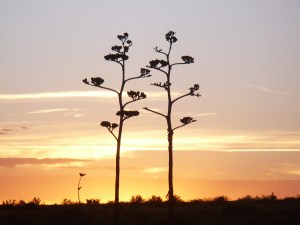
A Tree Should be Indigenous to Its Native Area
No, I didn’t say I was giving up my faith in my journal yesterday. If Buddhism had worked for me then I would have remained a Buddhist. After twenty years of practice I found that the simple act of surrendering to Christ was the act I needed. Maybe that was the point of Buddhism as well, one simply “surrenders” to the life one has. Somewhere though, in the mind-bending intellectual exercises of Buddhism, something gets lost, at least I got lost. It simply put me too much in my head. Buddhism is much like psychology in that way. One does simply have to find a place where one belongs and prosper there. One also has to get out of one’s head and simply live.
The other day I was asked to do some respite care. Four years ago a young man who was under the care of a friend at the agency I worked at found out I was looking for a house. He found this one for me and delivered the message through my friend and co-worker. My colleague moved on and is no longer this man’s therapist but he and I have remained acquaintances. He is in his forties now and autistic and mildly “retarded” whatever that means. His parents have asked me to watch over him while they go to Panama. It is an honor to do so. This autistic young man was the unexpected angel who led me to my home, I will never forget his generosity of spirit. That this gentleman, a retired minister, would trust me with his son is a personal validation in spite of the chaos and criticism of some in my profession here. His trust affirms for me that I have stayed true to my course, that I am trustworthy and professional.
Living here in Carlsbad has been a mixed bag. I have found friendship unexpected as well as frustration and pain.
Kathryn is beginning to find this small farm, this “finca” as they say in Spanish, home as well. It has been a year (yes, today is our anniversary) and this weekend we will finally have her house cleared out enough to turn over to the rental agent. We meet the rental agent’s cleaning crew today to find out what needs to be done to get the house finally ready. It has been a tough year for both of us. Being older and blending lives while trying desperately to hold on to old habits has been maddening for both of us. Add to that the drama and turmoil around us of those in the mental health field here and I wasn’t sure we would make it. I am still struggling with Kathryn’s “football-itis.” I have always struggled with spectator sports and find the commercialism of TV team sports irritating. I am sure I will make my peace with that as I have made my peace with cabinets that now seem over full. It has taken time but is coming together.
I have given long thought to what I should do next. I have mixed feelings about the equine assisted therapy. The man who has asked me to watch over his son became quiet interested when I told him what I was thinking and said that this town badly needed such a program. He knows, as we all do, that the mental health center here in town has failed the town badly.
For me, doing Equine-Assisted Psychotherapy is a fuzzy thing. Is it really “therapy” or is it teaching people “horse training?” I know it is more than horse training but I will have to really change how I see what I do in order to do it.
I badly want to step away form the role of “therapist.” I am tired of people’s pain and broken-ness, tired of the stories piled upon stories of hurt. There has to be more for people, I know that. I know too that people are tired of the jargon and the platitudes of psychotherapy. I know too that the best therapy is doing something, being engaged in life. We all need life experiences of accomplishment, things that bring us joy. This joy can and should come from a lot of things – Boy Scouts, participating in sports – the list is long. I know too that active joy is missing from many lives. I know too that an hour of “therapy” per week – the therapy of sitting in an office – can serve a purpose but it does not move people to the joy of mastery – any more than sitting in church for an hour a week. Yet, I am as bad as the therapists I rail about. I am trained in analytical office work. To me therapy has always looked like the guy sitting in an office in his tweed jacket, surrounded by books and in the quiet sanctum of the office he helps people explore their depths.
I tend to think that what I would really be doing is nothing more than teaching people ground work with horses. I think I may as well be a horse trainer or riding instructor. Yet, I know it would be more.
I know from my dreams that I have been spiritually moved on from the hermitage in the forest. Spiritually I have crossed the desert and know that the role of therapist, of seeker leads to more. I think often about the Herman Hesse book Siddhartha and how at the need of things Siddhartha becomes a ferryman on the river, carrying others to the shore, knowing that the place of his arrival is right where he is. I know that the same place comes from being a horseman, my ferry can be the work with horses. The value of doing it from the journey of being a therapist would simply be that even if I am no more than a riding instructor – a horse-ground-work-training-instructor – the insurance companies and colleagues and whoever will provide a source of referrals of people who might never try this route. Anyway, I am still thinking about what to do, the steps to take. I know that I would have to engage in a national horsemanship program of some sort to improve my own horse skills. Finding one that is not a “cult” like Parelli could be tough.
Finally, the quote above is from a blog out of Cody, Wyoming, called, “At Home in Wyoming.” She writes about how during an unexpected cold snap the green leaves of the non native trees fell all at once. I have seen such a thing once as well, it is something to see. She also makes the very good point that we must in some why find out place, our native place in the land and in our souls and there we will find home. Home is where work is not work but life itself. Home is where we all want to be – just like Dorothy. I have more to say about Dorothy and home, but today I need to get moving and there is tomorrow as long as we have breath to give . .
Wilderness Related Matters
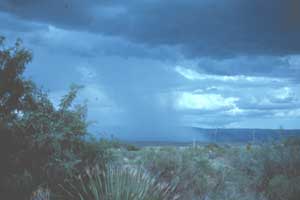 “No Tyranny is so irksome as petty tyranny: the officious demands of policemen, government clerks, and electro mechanical gadgets.” Edward Abbey
I always thought I had a pretty good idea of what constituted wilderness and things related to wilderness. I live in an isolated and rural area of the United States. I am surrounded by National Parks, National Forests, and State Parks. I live not very far from the first wilderness area ever designated as such in the United States, the Aldo Leopold. Most of my close friends are conservationists. I am married to a Park Ranger and we often speak of wilderness issues. I thought I understood wilderness until I received an email from a woman at the University of Montana who accidentally was added to my journal mailing list by the mysterious self adding genie living in my computer.
“A wilderness, in contrast with those areas where man and his own works dominate the landscape, is hereby recognized as an area where the earth and its community of life are untrammeled by man, where man himself is a visitor who does not remain. An area of wilderness is further defined to mean in this Act an area of undeveloped Federal land retaining its primeval character and influence, without permanent improvements or human habitation, which is protected and managed so as to preserve its natural conditions and which (1) generally appears to have been affected primarily by the forces of nature, with the imprint of man’s work substantially unnoticeable; (2) has outstanding opportunities for solitude or a primitive and unconfined type of recreation; (3) has at least five thousand acres of land or is of sufficient size as to make practicable its preservation and use in an unimpaired condition; and (4) may also contain ecological, geological, or other features of scientific, educational, scenic, or historical value.” As a person of one of the First Nations, I find this definition is wrong headed at best and racist at worst.
I had her address because of a brief correspondence with her about the wilderness quote page she monitors. When I find myself with “writer’s block,” I turn to this quote page to see if I can find the germ of an idea to get me started. For a while this quote site was “messed up.” It took a couple of days of correspondence to resolve those issues and I thought no more about this woman until I received her note in which she stated, “I would be more than happy to correspond with you on wilderness-related matters, but am not interested in receiving other emails. Thanks!” Apparently she received a journal I wrote about Turkey Vultures and felt that it was not wilderness related because it included First Nation creation stories. I am more than happy to delete her from my mailing list but her note made me to think about the idea of “wilderness – related matters” and just what “wilderness – related matters” would be. For clarity, I turned to the document which defines the wilderness movement, the 1964 Wilderness Act. In this document I found something which may be a clue to why this woman and I seem to have different ideas of what “wilderness-related” might be.
It is wrong headed because I do not think that “an area where the earth and its community of life are untrammeled by man, where man himself is a visitor who does not remain” has been the case for hundreds of thousands of years. By this definition, Olduvai Gorge could not have been wilderness for millennia since there are footprints preserved in ancient mud beds which show that man “trammeled” there and “his mark remained.” By this definition, the journals of Lewis and Clark and their Corps of Discovery make a strong case that they never encountered such a wilderness in North America on their journey to the Pacific from Missouri. The journal recounts how they worked their way up the Missouri River and stopped at the villages of the Arikaree and Mandan, they passed over the Mountains of Montana, Wyoming and Idaho to the villages of the Shoshone nations and then down the Columbia to the pacific and the villages of the Chinook and other northwest First Nations. Lewis and Clark were never in an area that was out of sight of an “area of the earth and its community untrammeled by man, where man is a visitor himself and does not remain.” No such area exists in North America. In fact, by this definition, since there are remnants of the Mogollon Culture inside the Aldo Leopold Wilderness, this area should lose its designation as wilderness, unless of course the people of the Mogollon culture were not really people after all.
And this points to the racism inherent int this definition.
This definition of wilderness automatically classifies any First Nations people and their communities either as “not men” or in need of removal so the earth can be untrammeled. This definition would build wilderness on the view that the earth lodge of the Mandan, the adobe of the Pueblo, or the Mound City of the Eastern Woodland, makes any area where First nations people left a trace not wilderness, since these areas are not “without permanent improvements or human habitation. If we give these places and the human communities they represent any status as “human” then what this definition calls wilderness never existed or First Nations communities never existed and First Nations peoples were not human.
A First Nations definition of wilderness would be very different – the white man came and saw the forbidding and the unfamiliar and called it wilderness – while the red man who lived here simply saw the familiar and called it home. As a First Nation’s person, I do not see wilderness existing opposed to man but in relationship to man. As a First Nations person I find it unfortunate that wilderness has taken a definition which so thoroughly excludes man. This land was never wilderness to us. What many in the environmental movement call “Wilderness” is in fact our landscape, and it is home. What many now call Wilderness has never been a place where man has not lived, it is a place where man has learned to live with the land and the landscape, become a part of it, working with it, but never excluded from it.
This “government clerk’s” definition of wilderness is the problem with so much of the conservation ethic. It is a definition which seems to hate man and excluded man from the material picture the landscape. The followers of the conservation ethic never realize that they are no different than the land users they despise. No one can exist outside of the landscape – when they try they simply come off as elitist in their exclusionary attitudes.
The real issue of wilderness is not just about preserving this or that tract of land in some pristine condition like a large natural zoo which only an elite has access too. The real issue of wilderness is about how we all live and how we either are or are not a part of our landscape. It is through our daily relationship with the land that we understand how well we are doing – the landscape is a mirror of us and we are a mirror of the landscape. We, landscape and mankind, reflect each other’s very soul.
I do not mean this to sound as a “Red man” versus “White man” issue. There have always been men and women of every race who have understood the idea of landscape in its truest sense. Those who truly understand landscape have generally been seen as the most spiritual people, not the most pragmatic people. For truly spiritual people wilderness is the place that exists in our hearts – it is the place of the undiscovered county that we all must come to terms with. It is the place where we stop being consumptive extractors and users. It does not mean we cease to be – it means we come to understand that who we are is in large part where we are and that “where” reflects our “who-ness.” The spiritual person comes to see that for our own continued existence, the more pragmatic view is the spiritual view. I know, all too well from personal experience dealing with my “more scientific friends,” that far too many college educated “scientists” take the almost religious position of scientism and view the spiritual as religious and the religious as the opiate of the masses and somehow the destroyer of nature and landscape and therefore wilderness. The reality is that a wilderness created without an understanding of man’s place in the landscape is merely a large inaccessible zoo.
I do understand what the wilderness act was referring to – it was referring to the trammeling of the capitalist mind set which is consumptive and extractive. I realize too that a bridle did have to be placed upon those activities or there would be nothing left, the consumptive, like the tuberculosis bacteria, eats and destroys its own host and arguably man, at least capitalist man, does just that. I enjoy knowing there are places like the Aldo Leopold and Bob Marshall Wilderness because I know these places are protected for now from the consumptive.
But, I know, too, that Anwar and the North Shore of Alaska are grand landscapes and great “wilderness” areas even though they are the trammeled home of men and women and have been for millennia. I would not for one moment expect or accept that the native Aleuts or Eskimos be removed or denied access to hunting in these Landscapes. Nor would I begrudge them modern tools of survival even though these tools may not seem to be of historic value. I know how hard it is to make do without a chain saw and though I have never had a dog team of my own, my wife has and tells me it is hard work. Understanding that, I think I would opt, in my more realistic moments, for a snowmobile too, if I had to survive in that tough landscape.
Wilderness is about one’s heart and one’s attitude, it is not simply about setting aside a place and calling it wilderness. Preserving wilderness should not be an oddity for the elitist who can afford expensive consumer equipment at REI or who gets his or her “bona fides” by being an academic, a government agent or a member of a “wilderness society.” Such people in their narrowness of view all too often betray the need for deeper understanding of wilderness in our lives. What they call wilderness is no wilderness at all. Wilderness as defined above is really nothing more than preserved landscape, a specimen in a lab jar. Real, vital, living landscape is about the nature of our heart and how we interact as a whole.
I have a friend who has come home from Europe to her small garden. This garden is in an Eastern State, it is her wilderness, a wilderness full of humming birds and cats and garden plants. Her landscape is not about exclusivity, it is about solitude and community and home. I venture to bet that she has a much better understanding of the “wilderness” and our relationship to it than someone who falls for the bureaucratic definition of wilderness as a location none of us is allowed to go (unless of course we can afford the equipment from REI that is made in factories in China that belch this stuff out on the back China’s destruction of their own landscape though the building of dams and coal fired power plants in order to create consumer goods.)
Landscape is a place of which we are an inextricable part. Landscape suffers for no other reason than our attitude of consumptiveness, exclusiveness and otherness. Wilderness as we have defined it is an attitude of exclusiveness. It excludes, by its very definition, man and places man as something “other” than a part of the great whole. Wilderness in the truest sense of the word is the landscape where we co-exist with the four legged and six legged and eight legged nations, where having fins or wings makes one no less important in the greater scheme of things. Wilderness is the home landscape of our soul and exists in direct proportion to our ability to rise above our own limited definition of our place in relationship to the other Nations of this world and our relationship with the Earth. Wilderness is not simply a five thousand-acre parcel of land having “outstanding opportunities for solitude or a primitive and unconfined type of recreation.”
I will respect the wishes of this woman at the University of Montana and will remove her from receiving my journals as she asks. I hope however she and all of you think about what the real meaning of wilderness is and in the thinking broaden your horizons into the wilderness of your heart – where The Nation of Man and all the other Nations of the Earth coexist. Maybe in doing so instead of isolated human-less spots called “wilderness” we will come to under stand that the earth itself and our place in it is home and wilderness simultaneously.
“Traditional people of Indian nations have interpreted the two roads that face the light-skinned race as the road to technology and the road to spirituality. We feel that the road to technology…. has led modern society to a damaged and seared earth. Could it be that the road to technology represents a rush to destruction, and that the road to spirituality represents the slower path that the traditional native people have traveled and are now seeking again? The earth is not scorched on this trail. The grass is still growing there.” William Commanda, Mamiwinini, Canada, 1991


 Earth, Hearth, Home